



By: Jacqueline Ortiz, August, 2026
Have you ever started a reading or writing lesson knowing exactly what you want students to learn, but struggled with how to turn that standard into language your students can actually understand?
Learning objectives are an important part of instruction, but the wording found in standards and curriculum documents is not always student-friendly. That is where “I Can” statements can help!
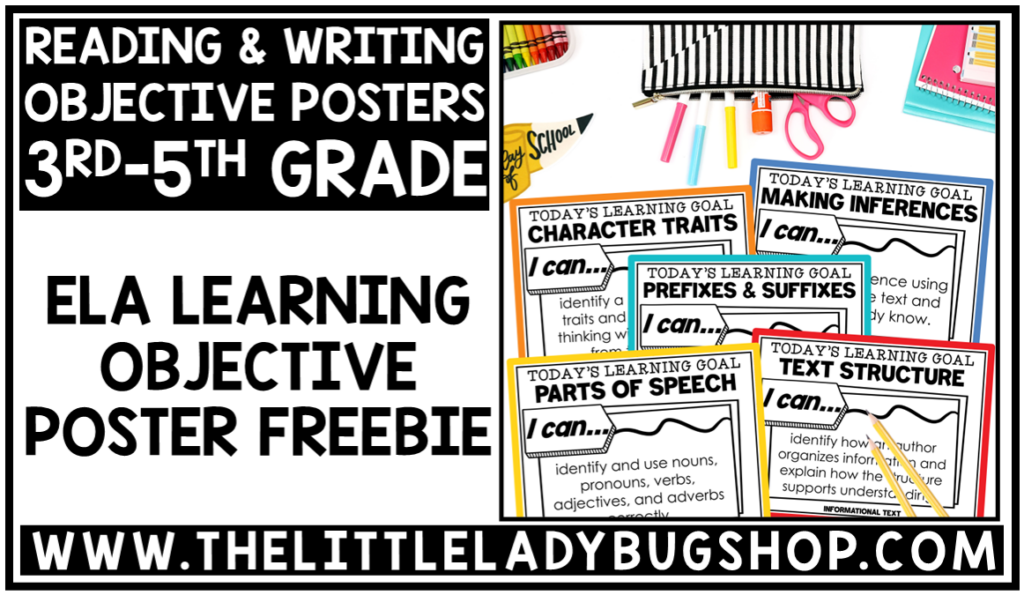
“I Can” statements take a learning objective and turn it into a clear, understandable goal that tells students exactly what they are learning and what they should be able to do.
Instead of simply telling students, “Today we are working on main idea,” we can give them a more meaningful goal:
I can identify the main idea of a text and explain how key details support it.
That small change helps move the focus from what students are doing to what students are learning.
What Are “I Can” Statements?
“I Can” statements are student-friendly learning targets written from the student’s point of view.
They answer one very important question:
What should I be able to do by the end of this lesson?
For upper elementary students, a strong “I Can” statement should be:
- Clear and easy to understand
- Focused on one specific skill or learning goal
- Connected to grade-level instruction and standards
- Written with meaningful academic vocabulary
- Specific enough that students can recognize when they have met the goal
For example:
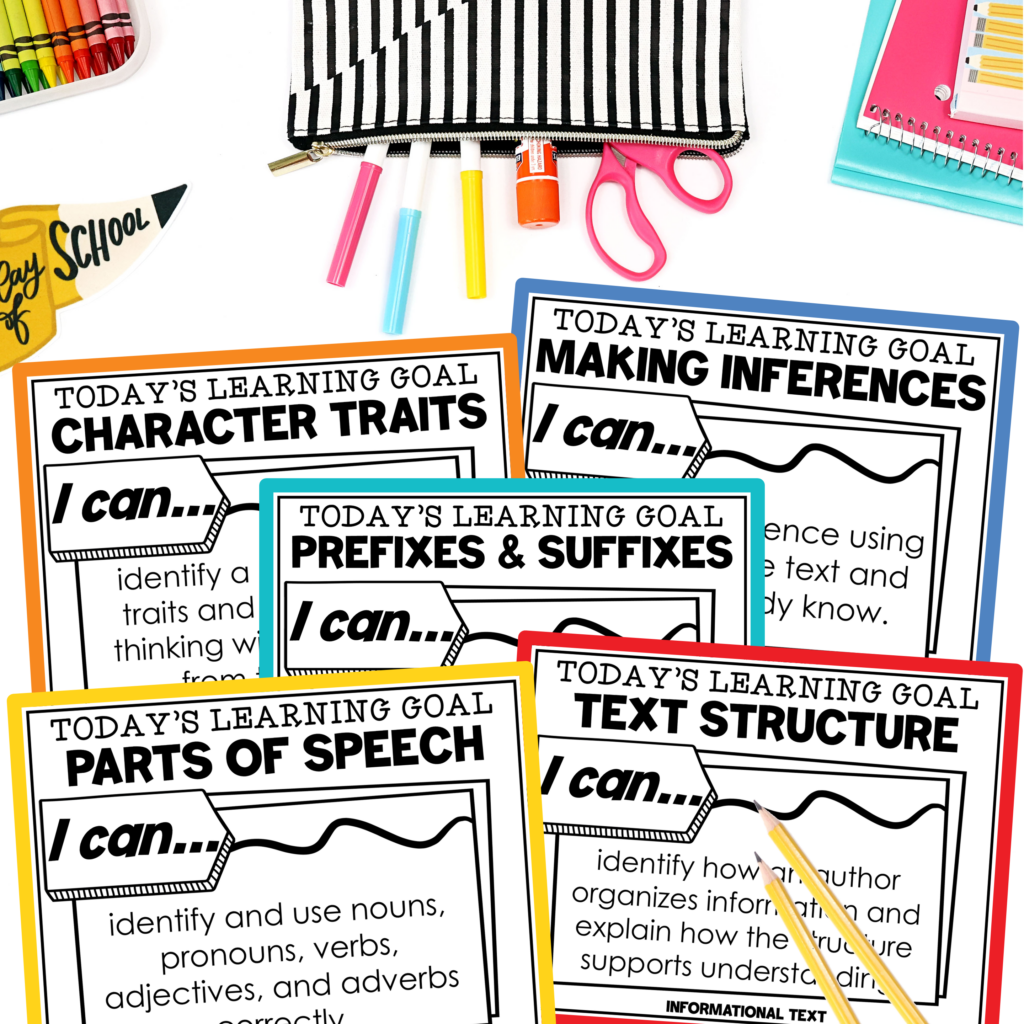
Skill: Making Inferences: I can make an inference using clues from the text and what I already know.
Students can understand exactly what they are practicing, while teachers are still using important academic vocabulary such as inference and text clues.
Why Use Learning Targets in Reading and Writing?
Upper elementary reading and writing instruction includes A LOT of skills.
During a single week, students might work on main idea, inference, text evidence, vocabulary, character traits, revising, grammar, and written responses. Clearly displaying the learning objective helps students understand the purpose behind the work.
Instead of thinking:
“I’m answering questions about this passage.”
We want students thinking:
“I’m learning how to use text evidence to support my answer.”
That distinction matters! When students know the learning goal, they can begin connecting individual assignments and activities to the larger reading or writing skill they are developing.
Reading & Writing “I Can” Statement Examples
Reading learning targets can be used during whole-group lessons, guided reading, small groups, intervention, independent reading, or reading centers. Here are a few examples for Grades 3–5:
- Main Idea: I can identify the main idea of a text and explain how key details support it.
- Making Inferences: I can make an inference using clues from the text and what I already know.
- Text Evidence: I can use evidence from the text to support my thinking and answers.
- Summarizing: I can summarize a text by including the most important ideas and details.
These objectives work especially well when they are displayed before instruction and revisited throughout the lesson.
Writing Learning targets can be just as valuable during writing instruction. Here are some examples:
- Planning: I can plan my writing by organizing ideas that match my topic, purpose, and audience.
- Drafting: I can develop a draft with clear ideas, details, and an organized structure.
- Revising: I can revise my writing to make my ideas clearer, stronger, and more interesting.
- Transitions: I can use transition words and phrases to connect ideas and help my writing flow.
The same idea can also be applied to specific writing genres, including narrative, informational, opinion, and research writing.
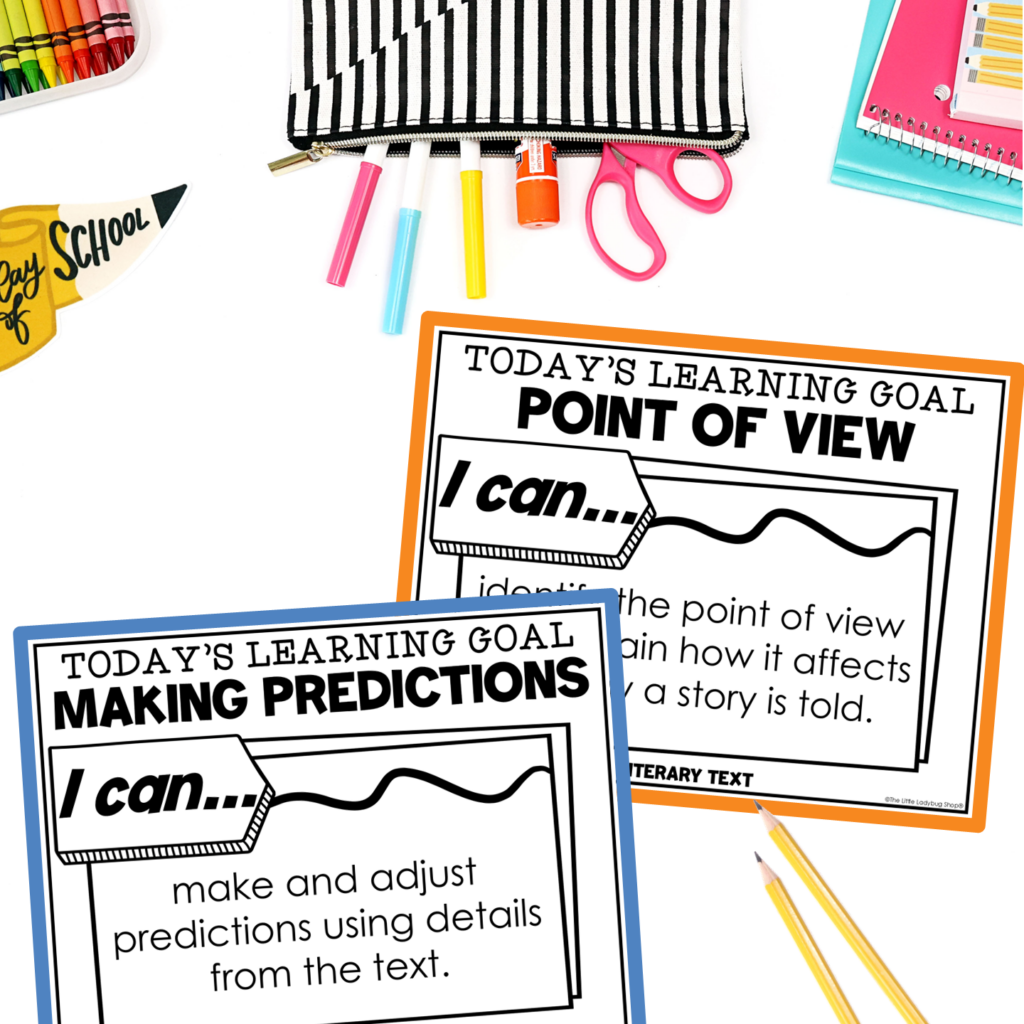
Don’t Forget Vocabulary, Grammar, and Language!
Learning targets don’t have to be limited to reading comprehension and writing. I also love using them for vocabulary and language instruction.
For example:
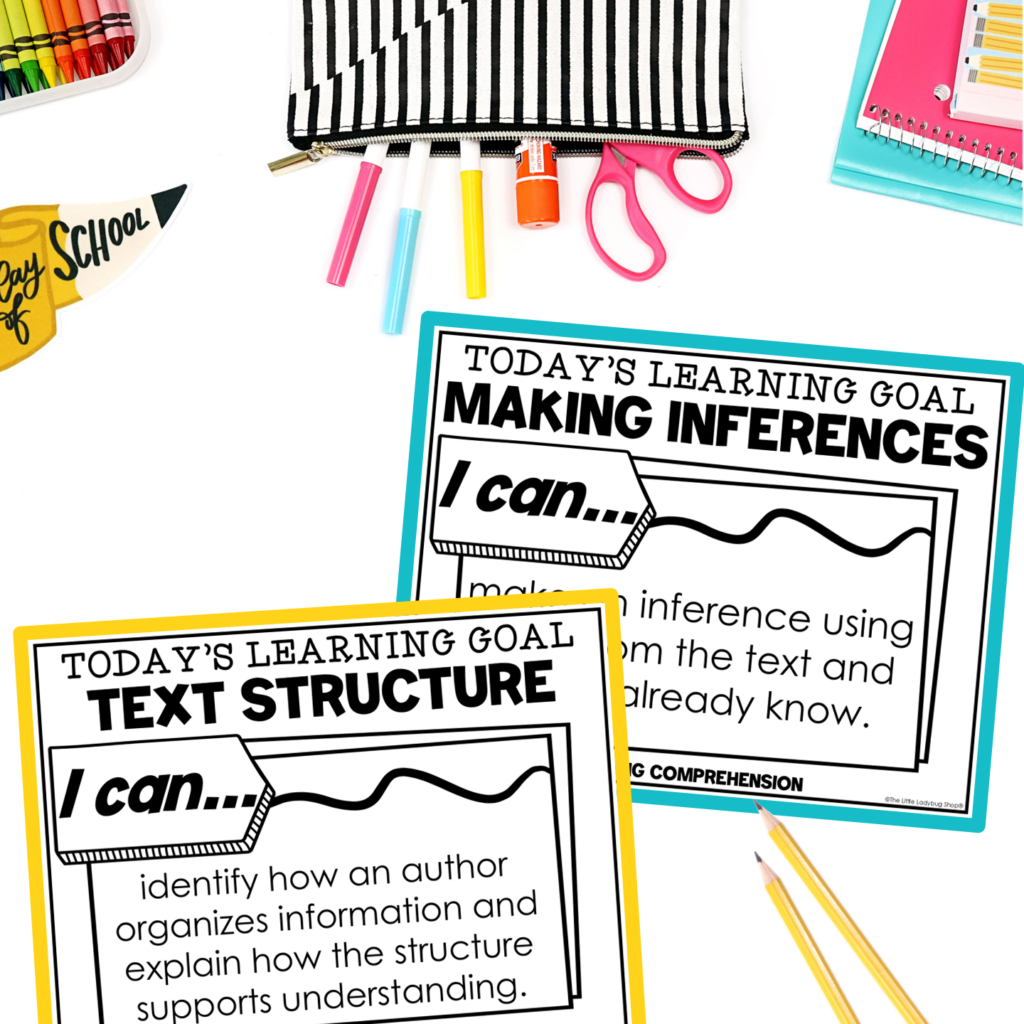
- Prefixes & Suffixes: I can use prefixes and suffixes to help determine the meaning of words.
- Roots: I can use common roots and word parts to help determine the meaning of unfamiliar words.
- Verb Tense: I can use consistent and appropriate verb tense in my speaking and writing.
- Subject-Verb Agreement: I can make subjects and verbs agree in number.
This helps students see grammar and vocabulary as skills they can apply, rather than simply worksheets or assignments they need to complete.
How I Use “I Can” Statements in the Classroom
There are so many ways to incorporate learning targets without adding another complicated routine to your day.
One of the easiest is to display the learning target at the beginning of the lesson. Read it together and briefly talk about what it means.
For example, if the day’s objective is:
I can use evidence from the text to support my thinking and answers.
Ask students: What would it look like if we were successful with this goal today?
Students might say that they would go back to the passage, find information that supports their answer, and explain how that evidence connects to their thinking.
Now the learning target isn’t simply something displayed on the board. Students actually understand it.
Revisit the Learning Target
This is one of my favorite ways to make learning objectives more meaningful. At the end of your lesson, return to the “I Can” statement and ask students to reflect:
Can I do this independently?
What evidence shows that I understand this skill?
What part is still challenging for me?
You can do this orally, through a quick turn-and-talk, on a sticky note, or as an exit ticket. It only takes a few minutes, but it encourages students to think about their own learning and progress.
Other Ways to Use “I Can” Statements
You can also use learning targets:
- As part of an objectives board (put in a binder or clear sleeves and flip through when using)
- During reading and writing mini-lessons
- During small-group instruction
- At a teacher table
- During intervention
- As printed posters on a reading or writing bulletin board
- As a quick student self-assessment at the end of a lesson
You don’t have to use every learning target or follow them in a particular order. Choose the statement that matches what you are teaching that day.
Connecting “I Can” Statements to Your Standards
The standards themselves should always guide instruction, but teachers can translate those expectations into language that is more accessible to students.
Because standards vary by state, district, and grade level, I recommend first identifying the standard you are teaching and then selecting or creating an “I Can” statement that communicates the learning goal in student-friendly language.
This also makes a collection of general Grades 3–5 learning targets especially useful. Teachers can connect the appropriate target to their own required standards rather than being limited to one specific state or curriculum.
FREE Reading & Writing “I Can” Statements
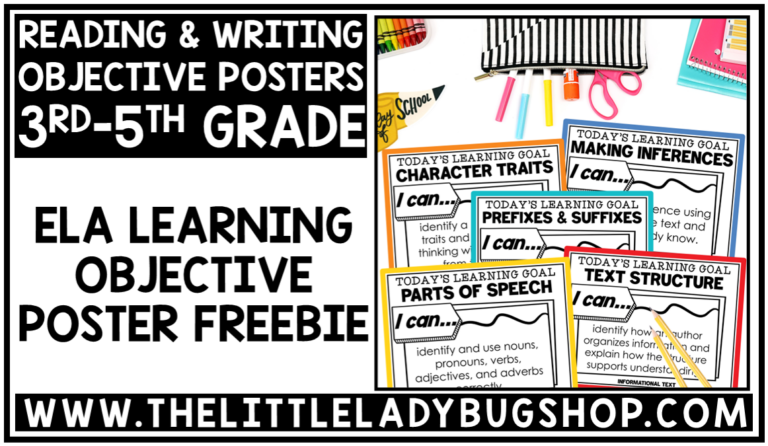
I wanted to make displaying learning objectives easier, so I created a set of Reading & Writing “I Can” Statements for Grades 3–5 that teachers can use throughout the school year.
The resource includes 65 student-friendly learning targets covering:
- Reading Comprehension
- Literary Text
- Informational Text
- Author’s Craft
- Vocabulary
- Writing Process
- Writing Genres
- Grammar & Language
- Speaking & Listening
- Research Skills
Each slide clearly displays the learning goal, skill, and student-friendly “I Can” statement, making it easy to project during instruction or use as part of your classroom objectives display.
Grab the Reading & Writing “I Can” Statements HERE!
You can display the slides digitally, choose the objective that matches your lesson, or print your favorites to create a classroom learning-target display.
Helping Students Understand the “Why”
Ultimately, displaying a learning objective isn’t about checking another item off our teacher to-do list.
It is about helping students understand:
- What am I learning?
- Why am I learning it?
- How will I know when I can do it?
When our learning targets are clear, specific, and student-friendly, students have a much better opportunity to take ownership of their learning.
And sometimes something as simple as beginning a lesson with “I can…” can make that goal a whole lot clearer.
Make sure to Pin and Save this Post for Future Reference
This post may contain affiliate links for your convenience. View our full disclosure policy here.